By Mark Williams | Exterior Remodeling Expert
Take a drive through any new luxury subdivision, and you will see it everywhere. Crisp, vertical lines marching across the facades of modern farmhouses, Scandinavian inspired cottages, and contemporary ranches.
Board and batten siding is the undisputed king of exterior cladding in 2026.
But this trend is not exactly cheap. If you are getting quotes for a full exterior siding replacement, you have probably noticed that a board and batten installation costs significantly more than standard horizontal lap siding.
Is this vertical aesthetic just a passing Instagram fad, or is it a smart, long term architectural upgrade that adds real value to your home? Let us break down the costs, the materials, and the reality of the board and batten trend.
1. What Exactly is Board and Batten?
Board and batten is a historic siding profile that dates back hundreds of years to early American barns and European cottages.
It consists of wide, vertical planks (the "boards") with narrow vertical strips (the "battens") nailed over the seams where the wide boards meet. Originally, this was a practical way to seal the gaps between wood planks to keep out the wind and rain. Today, it is used purely for its striking, architectural aesthetic.
The Visual Impact
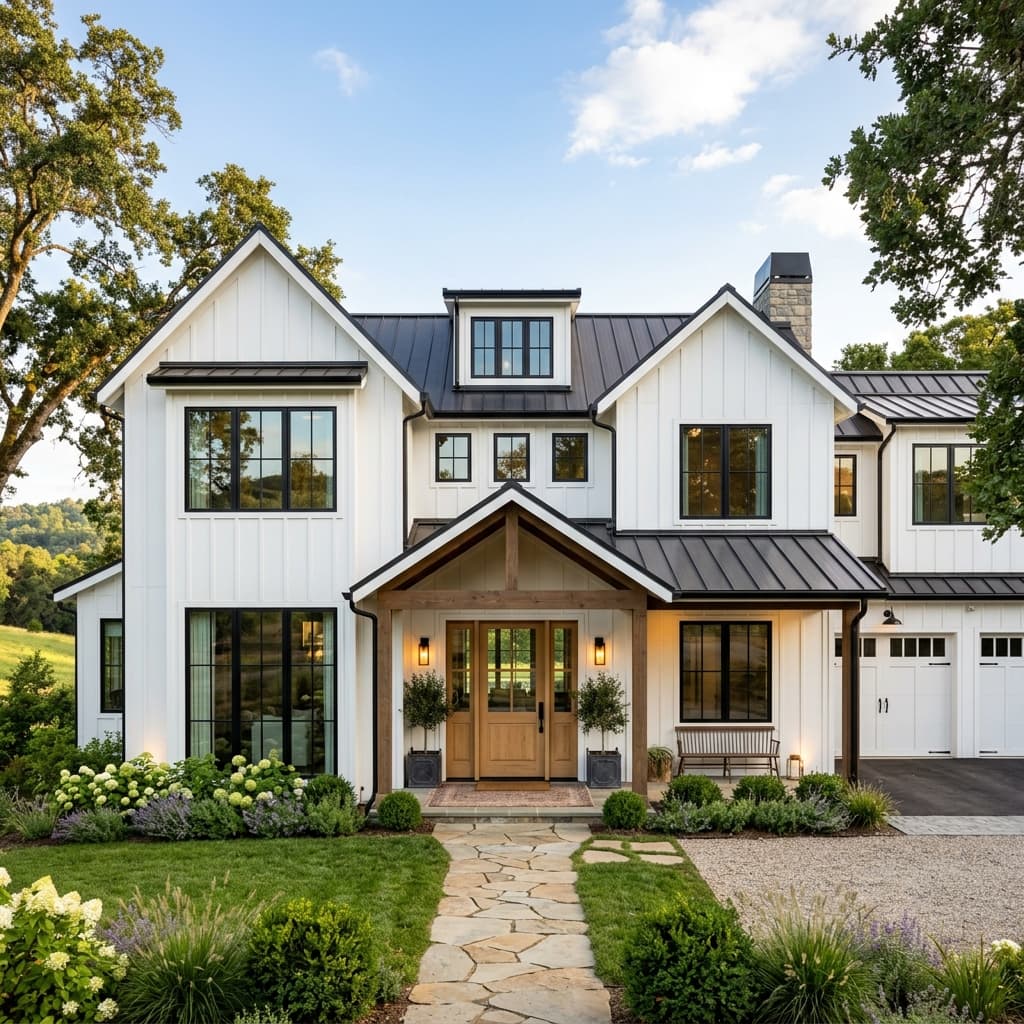
- Added Height: Vertical lines draw the eye upward. If you have a single story ranch or a home with low rooflines, installing board and batten siding instantly makes the house appear taller and much more substantial.
- Shadow Lines: The protruding battens catch the sunlight, creating deep, dramatic shadow lines that give the exterior a highly textured, custom built feel that flat horizontal siding simply cannot match.
Want to see this design on your house?
Don't just read about it. Upload a photo of your home and use our free AI visualizer to test these styles instantly.
Start Designing For Free2. Why Does It Cost More?
If you choose fiber cement (like James Hardie) or engineered wood (like LP SmartSide), a board and batten installation will typically cost 20 to 35 percent more than a standard horizontal lap siding installation.
The premium price tag comes down to two major factors: material waste and intense labor.
The Material Reality
When installing horizontal siding, a contractor simply stacks planks on top of each other. With board and batten, we have to order large 4x8 or 4x10 foot panel boards, plus hundreds of linear feet of individual batten strips. Cutting large panels to fit around windows and roof gables creates a massive amount of wasted material (often up to 15 percent waste), which you have to pay for.
The Labor Intensity
Standard lap siding goes up incredibly fast. Board and batten requires meticulous precision. The contractor must measure and snap chalk lines for every single batten strip to ensure the spacing is perfectly mathematically even across the entire wall. If the battens are off by a quarter of an inch, the human eye will instantly spot the mistake, and the wall will look terrible. The extra days of meticulous labor drastically increase the final bill.
3. The Best Materials for the Job
Historically, board and batten was made from rough sawn cedar. Today, I almost never recommend real wood due to the rotting and woodpecker issues.
- Fiber Cement (James Hardie): This is the gold standard for the modern farmhouse look. It is fireproof, rot proof, and incredibly heavy. Hardie offers large panels and pre-cut batten strips that hold paint beautifully for 15 years.
- Engineered Wood (LP SmartSide): This is my personal favorite material for this application. It is much lighter and easier to cut than fiber cement, but it offers incredible impact resistance and a very convincing, realistic wood grain texture.
- Vinyl: I strongly advise against vinyl board and batten for large unbroken walls. Vinyl expands and contracts heavily, causing the wide vertical panels to warp and buckle, which completely ruins the clean, straight architectural lines the style demands.
My Final Take
The crisp, white board and batten "Modern Farmhouse" look has undoubtedly reached its peak saturation point in the market. However, the vertical board and batten profile itself is a timeless architectural element.
If you are worried about the style looking dated in ten years, simply avoid the stark white and black color palette. Board and batten looks incredibly sophisticated and permanent when painted in dark, moody colors (like deep charcoal, navy blue, or olive green). While it requires a premium investment for the extra labor and materials, the dramatic texture and visual height it adds to a home make it one of the most impactful upgrades you can choose.