By Mark Williams | Exterior Remodeling Expert
For generations, a solid mahogany or oak front door was the ultimate status symbol for a luxury home. The weight, the rich grain, and the classic craftsmanship of real wood were unmatched.
But over the last five years, I have seen a massive shift in the luxury exterior remodeling market. Homeowners building custom $2 million homes are increasingly rejecting traditional wood doors and installing fiberglass instead.
If you are planning an entryway renovation in 2026, you will inevitably face the fiberglass versus wood debate. As a contractor who has installed hundreds of both types, here is my honest breakdown of why fiberglass is rapidly taking over the high end market.
1. The Maintenance Reality of Real Wood
There is no denying that a real wood door is beautiful on the day it is installed. But a front door is the single most exposed piece of millwork in your entire home. It faces brutal UV radiation, pounding rain, and freezing temperatures.
The Wood Door Nightmare
Wood is a porous, organic material. It constantly wants to absorb moisture and dry out.
- Swelling and Sticking: In humid summer months, a wood door will swell, causing it to stick and rub against the frame. In the dry winter, it will shrink, creating drafty gaps.
- The Refinishing Tax: To prevent a wood door from splitting, rotting, and looking terrible, you must sand it down and re-apply a high quality marine grade varnish every one to two years depending on its sun exposure. It is a messy, expensive, and time consuming chore that most homeowners eventually neglect.
2. The Unmatched Durability of Fiberglass
Want to see this design on your house?
Don't just read about it. Upload a photo of your home and use our free AI visualizer to test these styles instantly.
Start Designing For FreeFiberglass doors were invented to solve every single problem associated with wood. They are constructed with a rigid polyurethane foam core surrounded by a high impact fiberglass skin.
Engineered for the Elements
- Zero Warping: Fiberglass does not absorb moisture. It will never swell, shrink, warp, or stick in the frame, regardless of how humid or dry the climate gets.
- Incredible Insulation: Because fiberglass doors are filled with high density polyurethane foam, they are up to five times more energy efficient than a solid wood door. This translates to lower heating bills and a more comfortable foyer.
- Virtually Maintenance Free: A high quality fiberglass door will never rot or rust. To keep it looking brand new, you simply wipe it down with a damp cloth once a season.
3. The Aesthetics: Can You Tell the Difference?
In the early 2000s, fiberglass doors looked like cheap, stamped plastic. This is the primary reason many traditionalists still turn their noses up at them today.
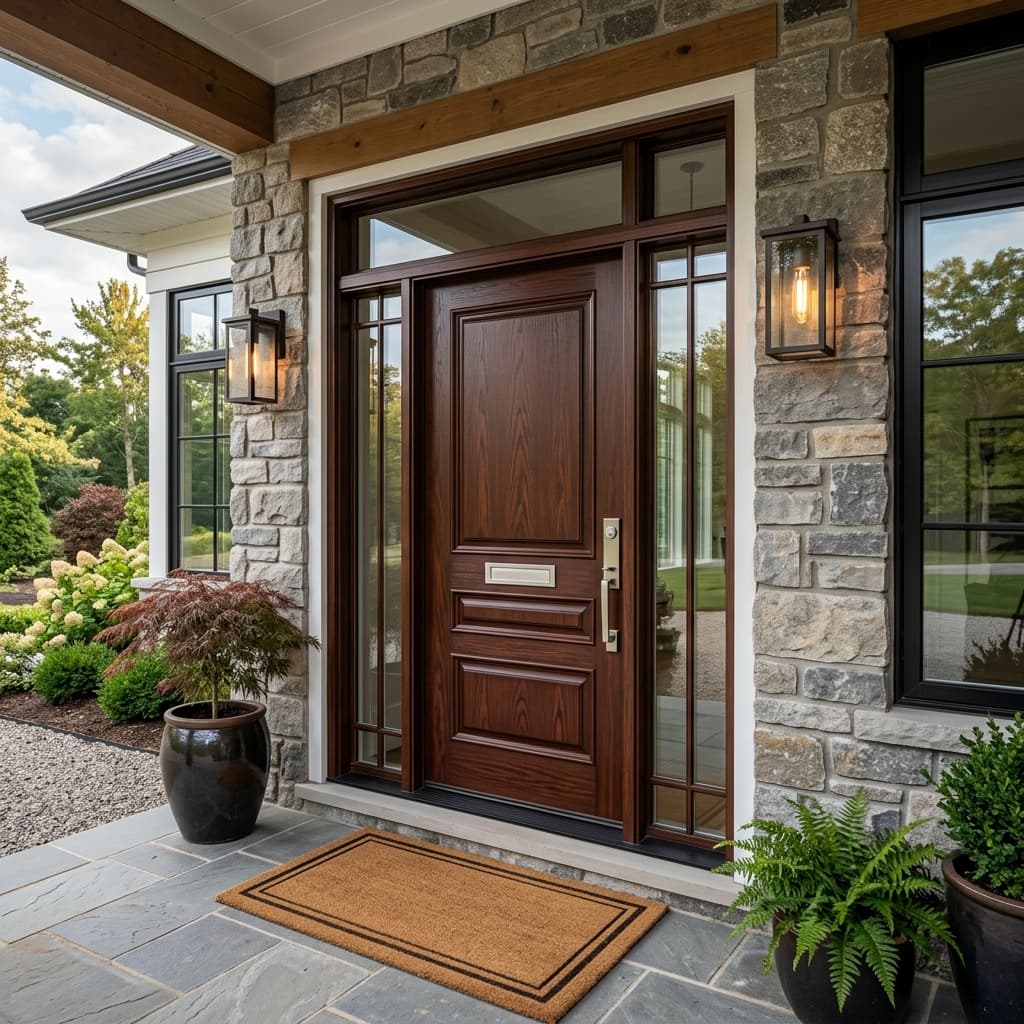
However, the manufacturing technology has advanced lightyears. Today's premium fiberglass doors (from brands like ProVia and Therma-Tru) are manufactured using AccuGrain technology. They literally cast the fiberglass skins in molds made from real, premium wood planks (like mahogany, oak, and knotty alder).
The Finishing Process
When you order a premium fiberglass door, it is not just painted. It is hand stained by artisans at the factory using specialized gel stains that settle into the cast grain patterns, perfectly mimicking the depth and color variation of natural wood.
I regularly install fiberglass doors that are so realistic, seasoned carpenters cannot tell they are synthetic until they physically knock on the door and hear the hollow thud of the fiberglass shell instead of a solid block of wood.
My Final Take
If you have a historic, 19th century home located in a heavily protected historic district, you may be required to use real wood to satisfy the architectural review board. And if your front door is situated under a massive, deep covered porch where it never sees a drop of rain or a ray of sunlight, wood is perfectly fine.
But for 95 percent of my clients, I strongly recommend fiberglass. A premium fiberglass door costs roughly the same as a mid-tier wood door, but it provides significantly better insulation, perfectly mimics the aesthetic of luxury wood, and completely eliminates the nightmare of annual sanding and varnishing. It is simply a superior, smarter investment for the modern homeowner.