
Solid Gray Design
Explore the latest trends for solid gray epoxy garage floor design. Find the perfect look for your home's architecture and discover complementary materials.
See this on your own home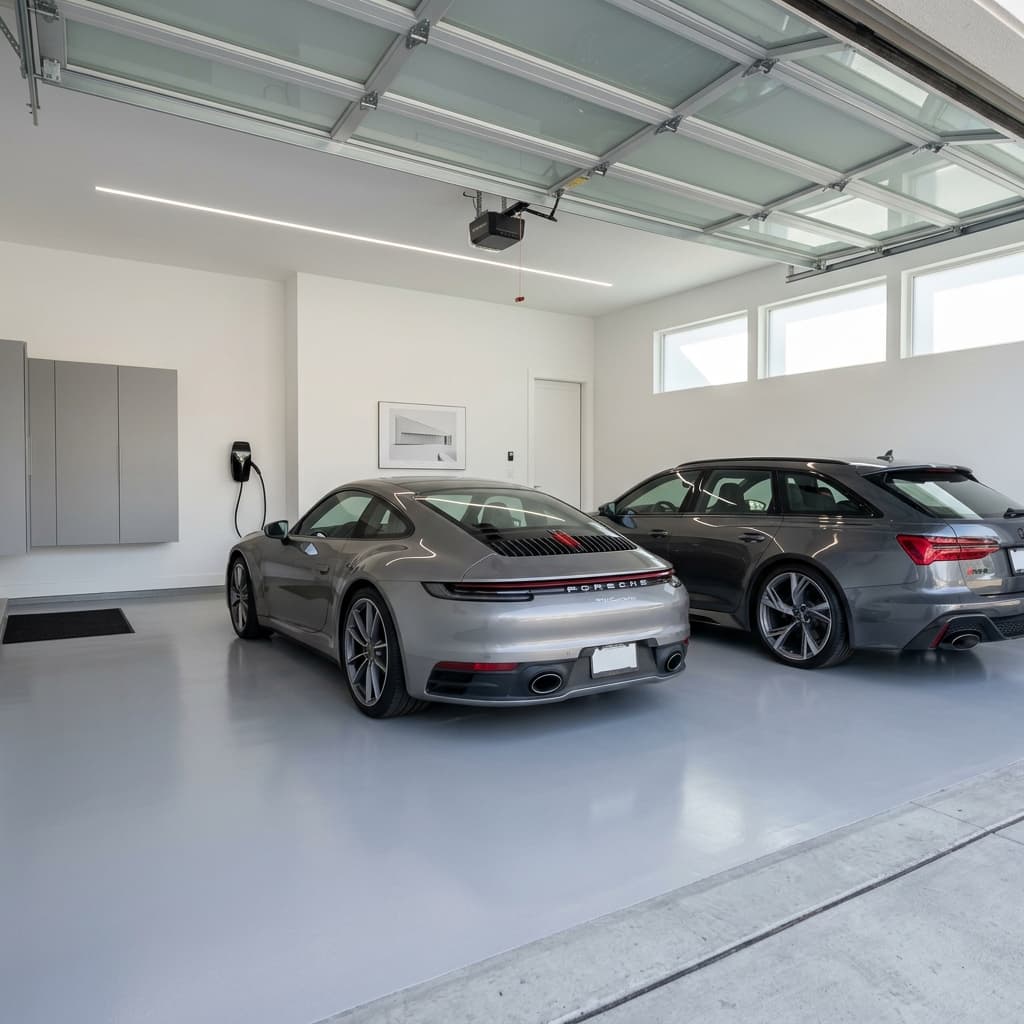
Design Considerations
What you need to know before choosing solid gray design.
Pros
- Clean, minimalist, and highly modern
- Makes the garage look like an interior room
- Easy to find dropped tools and parts
Cons & Challenges
- Shows every single piece of dirt, dust, and tire mark
- Highlights any underlying imperfections in the concrete
- Can be dangerously slippery without added aluminum oxide
Minimalist Perfection: Solid Gray Epoxy Garage Floors
In recent years, the garage floor coating market has been dominated by highly complex, busy designs—swirling metallic epoxies and heavily patterned black-and-white flake floors. While these options are excellent at hiding dirt, they can sometimes look overly chaotic or distract from the vehicles parked inside.
For homeowners seeking a hyper-clean, ultra-modern, and minimalist aesthetic, the trend is shifting back to the absolute basics: the Solid Gray Epoxy Floor.
The Interior Design Extension
The goal of a solid gray epoxy floor is to make the garage look exactly like an interior room of the house.
By utilizing a perfectly smooth, solid, medium-gray epoxy (often finished with a matte or satin clear coat rather than a blinding high-gloss), the concrete floor is transformed. It looks less like a utilitarian parking pad and more like a high-end, polished concrete floor you would find in a luxury modern art gallery or a minimalist loft apartment.
This clean slate acts as the perfect backdrop for modern, brightly colored tool cabinets, minimalist slat-wall organization systems, and, most importantly, the cars themselves.
The Brutal Maintenance Reality
Before you commit to the minimalist beauty of a solid gray floor, you must accept the brutal reality of maintaining it.
A full-broadcast flake floor is designed specifically to camouflage dirt. A solid gray floor camouflages nothing.
- Every single wet footprint, every drop of muddy water from your tires, every fallen autumn leaf, and every speck of light-colored sawdust will be immediately and highly visible against the solid background.
- If you drive a car with soft, high-performance tires, "hot tire pickup" can leave faint brownish/black stains on the gray floor where the car parks.
If you are not the type of person who is willing to sweep or mop their garage floor once a week, a solid gray floor will quickly become a source of massive frustration.
Hiding Concrete Flaws (Or Failing To)
Because a solid color provides zero visual distraction, the concrete substrate beneath it must be absolutely flawless.
If your concrete slab has spiderweb cracks, pitting from road salt, or uneven patches, you cannot simply paint solid gray epoxy over them. The high-gloss nature of the epoxy will magnify every single divot and crack, making the floor look terrible.
Before a solid gray coating can be applied, the installation contractor must spend hours (and charge significantly more) meticulously grinding the concrete perfectly flat, filling every micro-crack with an epoxy patch, and sanding the patches perfectly smooth. The preparation for a solid floor is vastly more demanding than the preparation for a flake floor.
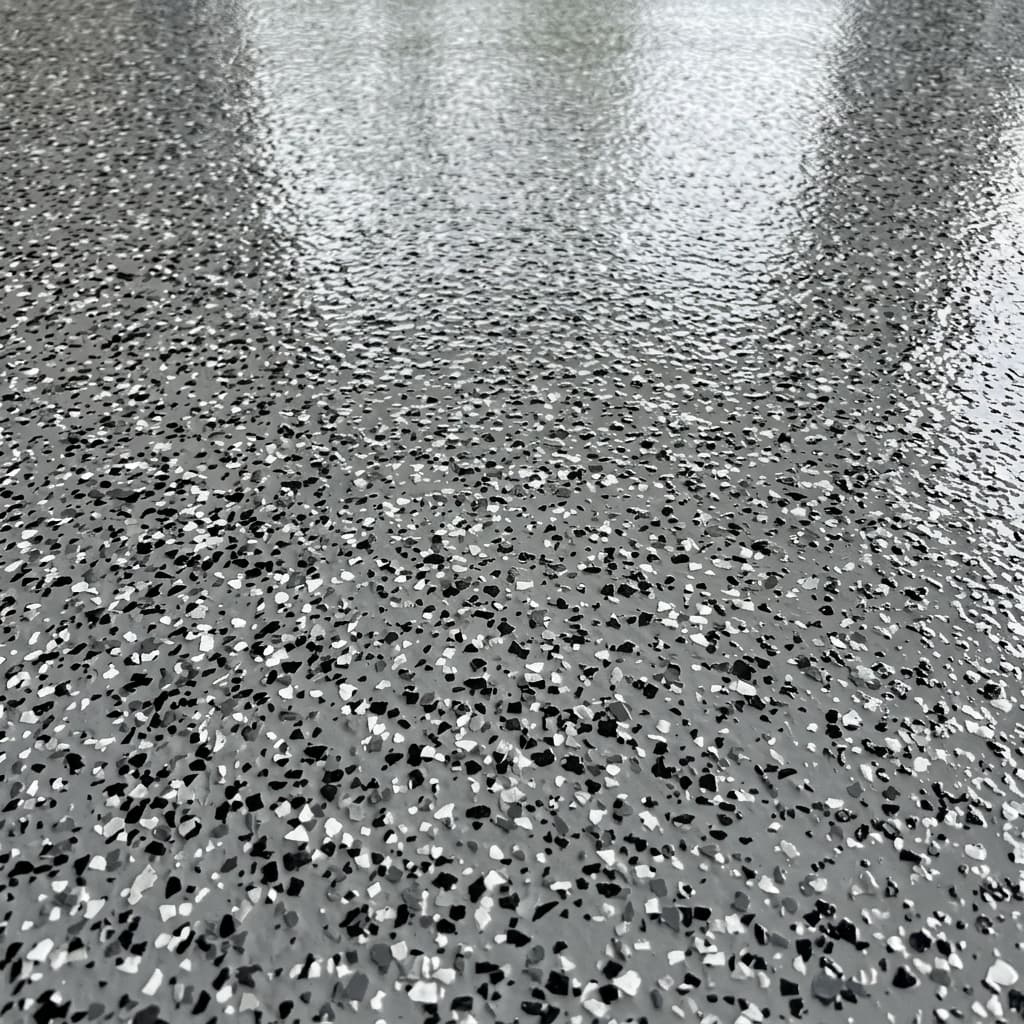
Material Textures & Finishes
Up-close details of the garage epoxy materials featured in these designs.
Frequently Asked Questions
Common questions about solid gray design and exterior visualization.
How can I see what my house looks like with solid gray design?
You don't have to guess based on small samples. You can use Exterior Vibe's free AI visualizer to upload a photo of your house and instantly see solid gray design applied to your exterior in seconds.
Is there an app to test garage epoxy on my home exterior?
Yes, Exterior Vibe is a free web application that allows you to test different garage epoxy options on your actual home. Simply upload a photo and the AI will apply the new materials, taking lighting and rooflines into account.