Shingle Colors for Tan Siding
Explore the latest trends for best roof shingle color for tan siding. Find the perfect look for your home's architecture and discover complementary materials.
See this on your own home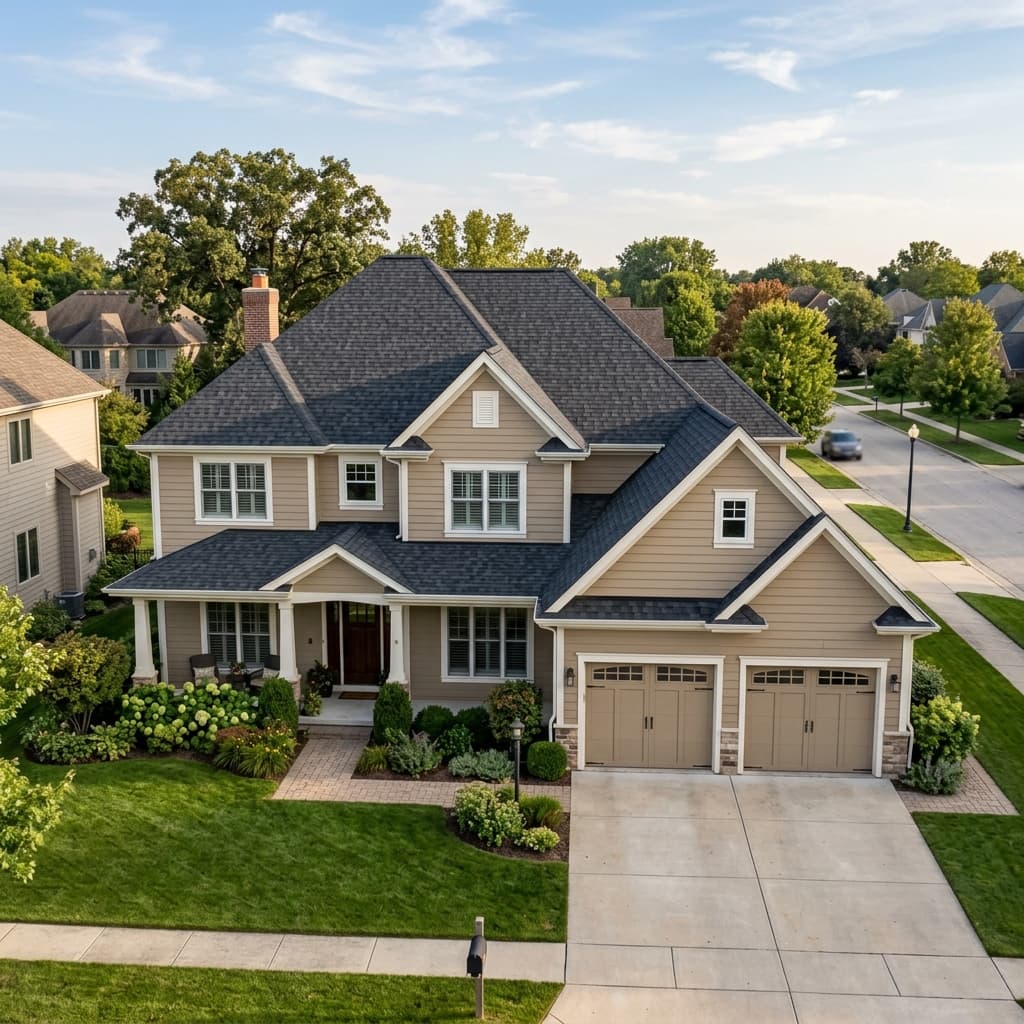
Design Considerations
What you need to know before choosing shingle colors for tan siding.
Pros
- Brown and weathered wood shingles create a warm, cohesive look
- Charcoal provides a grounding, modern contrast
- Hides roof dirt and algae well
Cons & Challenges
- Matching undertones (warm vs cool) is tricky
- Too much brown can look muddy and outdated
- Light colored shingles show streaking faster
Selecting the Perfect Roof Shingle for Tan Siding
When your home features tan, beige, or sand-colored siding, you have a surprisingly versatile canvas. Because tan is a warm neutral, it allows for several different roofing directions, depending on the architectural style and vibe you want to achieve. However, making the wrong choice can leave the house looking muddy, dated, or entirely mismatched.
The secret to choosing the right roof for tan siding lies in understanding contrast and undertones.
The Classic Approach: Brown and Weathered Wood
The most traditional and foolproof pairing for tan siding is a brown or "weathered wood" architectural shingle.
Why it works: Tan is essentially a very light shade of brown. By choosing a medium or dark brown roof, you create a monochromatic, harmonious color palette. This looks exceptionally beautiful on Craftsman homes, rustic cabins, or homes situated in heavily wooded areas.
The risk: If you choose a roof color that is too close in lightness to your siding, the house will look like a solid block of beige. You must ensure there is enough contrast—the roof should be significantly darker than the siding to visually anchor the home.
The Modern Update: Charcoal and Black
If you want to drag a beige or tan house out of the 1990s and into the current decade, a dark charcoal or black roof is the ultimate weapon.
Why it works: Black is a universal neutral that provides massive contrast. It sharpens the lines of the house, makes the tan siding look cleaner and more intentional, and pairs perfectly with modern black window frames or black front doors.
The risk: Black roofs absorb significantly more heat than brown or gray roofs. Ensure your attic is properly ventilated before upgrading to a black roof.
The Mistake to Avoid: Cool Grays and Blues
The single biggest mistake homeowners make with tan siding is pairing it with a cool-toned roof, such as a slate blue, icy gray, or green shingle.
Tan has warm (yellow/orange/red) undertones. Cool gray has blue/purple undertones. When you place them next to each other, they clash violently. The gray roof will make the tan siding look artificially yellow, and the tan siding will make the gray roof look purple. Always stick to warm-toned or true-neutral (black) roofs when dealing with tan siding.
Material Textures & Finishes
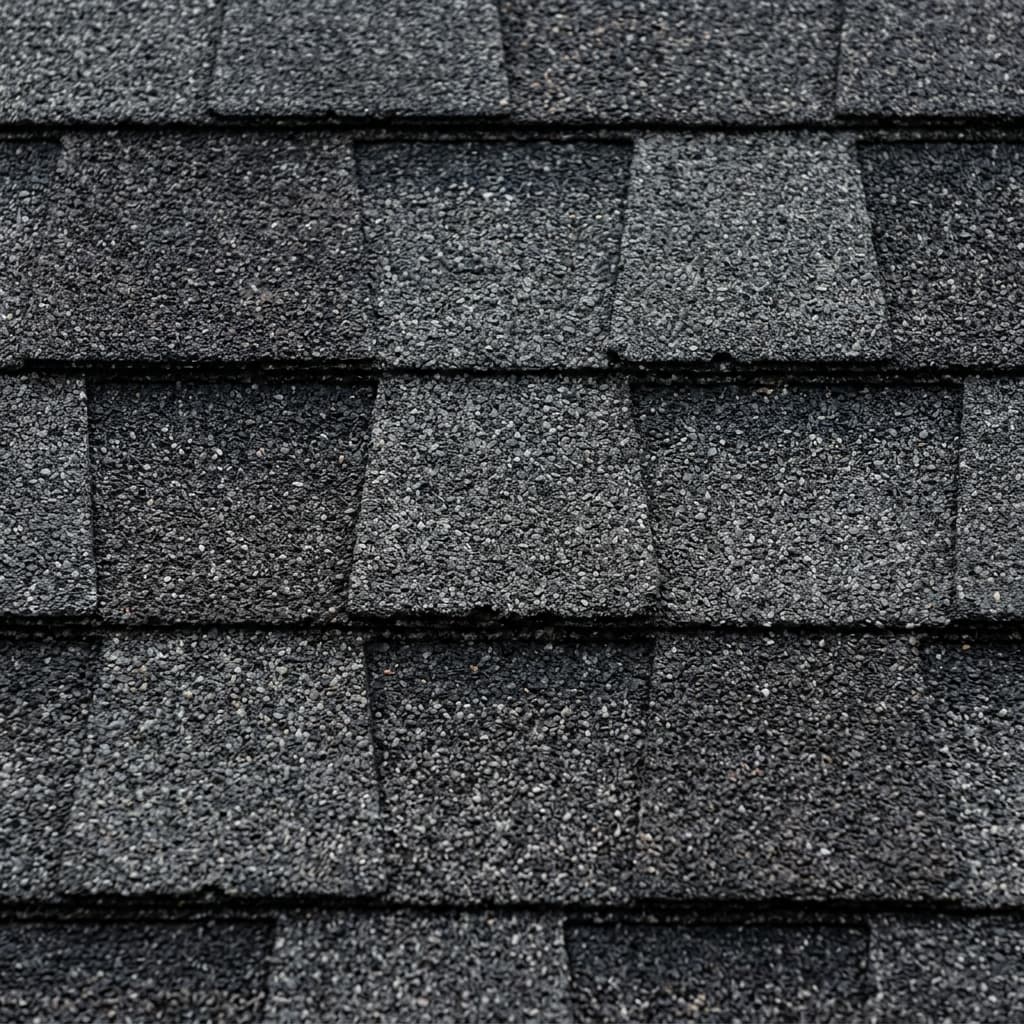
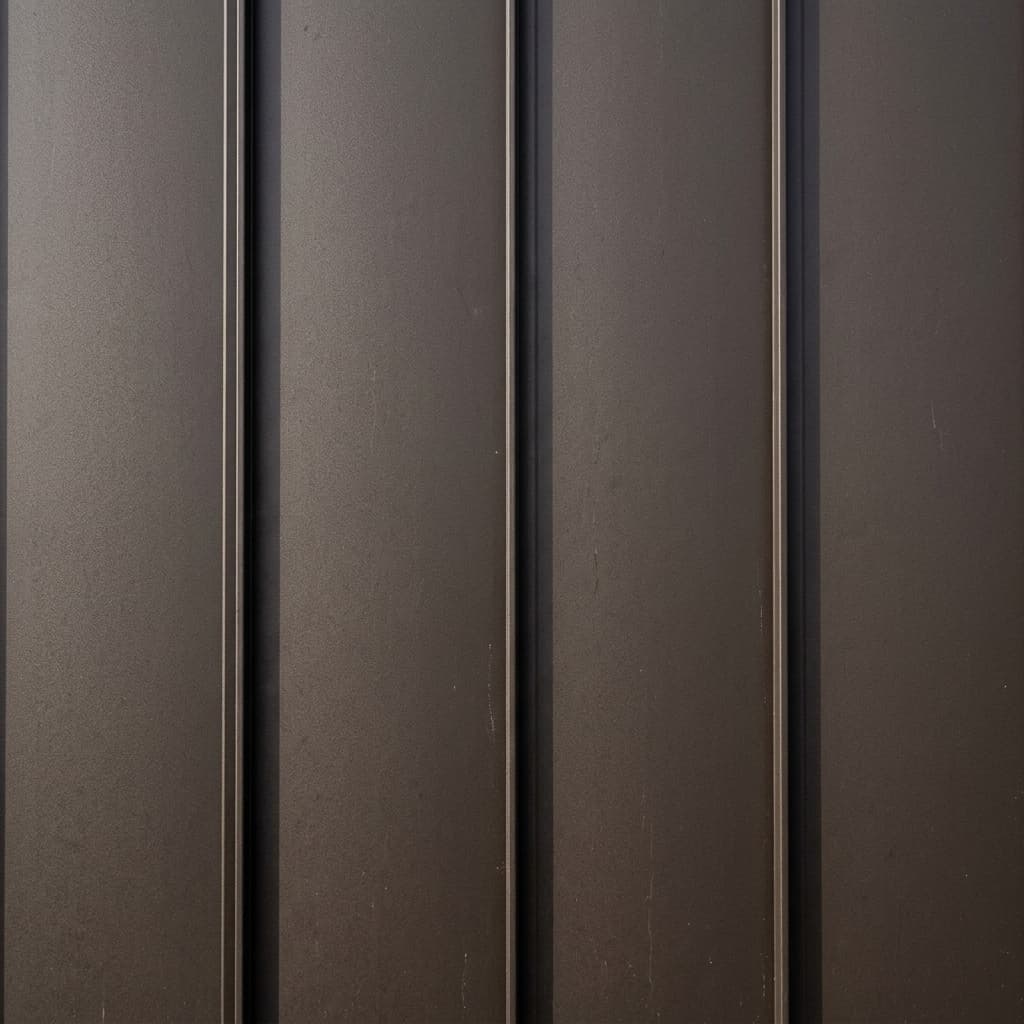
Up-close details of the roof materials featured in these designs.
Authoritative Sources
Exterior Vibe relies on objective data and industry standards. For more technical information regarding roof materials, consult these trusted organizations:
Frequently Asked Questions
Common questions about shingle colors for tan siding and exterior visualization.
How can I see what my house looks like with shingle colors for tan siding?
You don't have to guess based on small samples. You can use Exterior Vibe's free AI visualizer to upload a photo of your house and instantly see shingle colors for tan siding applied to your exterior in seconds.
Is there an app to test roof on my home exterior?
Yes, Exterior Vibe is a free web application that allows you to test different roof options on your actual home. Simply upload a photo and the AI will apply the new materials, taking lighting and rooflines into account.