By Mark Williams | Exterior Remodeling Expert
Every spring, I sit at kitchen tables with homeowners who are ready to build the backyard deck of their dreams. And every single time, we hit the exact same roadblock: the massive upfront price difference between traditional pressure treated wood and premium composite decking.
When a client sees the quote for a composite deck, they often gasp. It is not uncommon for a high quality composite deck to cost double the price of a basic wood deck on day one.
However, as a contractor who has repaired, replaced, and torn down hundreds of rotting decks, I am here to tell you that the day one price is a complete illusion. If you plan on living in your home for more than five years, traditional wood is almost always the more expensive option.
Here is my honest, unfiltered breakdown of the true 10-year cost of wood versus composite decking.
1. The Day One Cost Comparison
Let us start with the raw materials. For a standard 16x20 foot deck (320 square feet), the initial material and labor costs are vastly different.
- Pressure Treated Pine (The Cheap Option): Pine is abundant and easy to manufacture. The decking boards alone for a 320 square foot deck might cost around $1,500. With labor and the framing structure, you are looking at roughly $8,000 to $10,000 for the finished project.
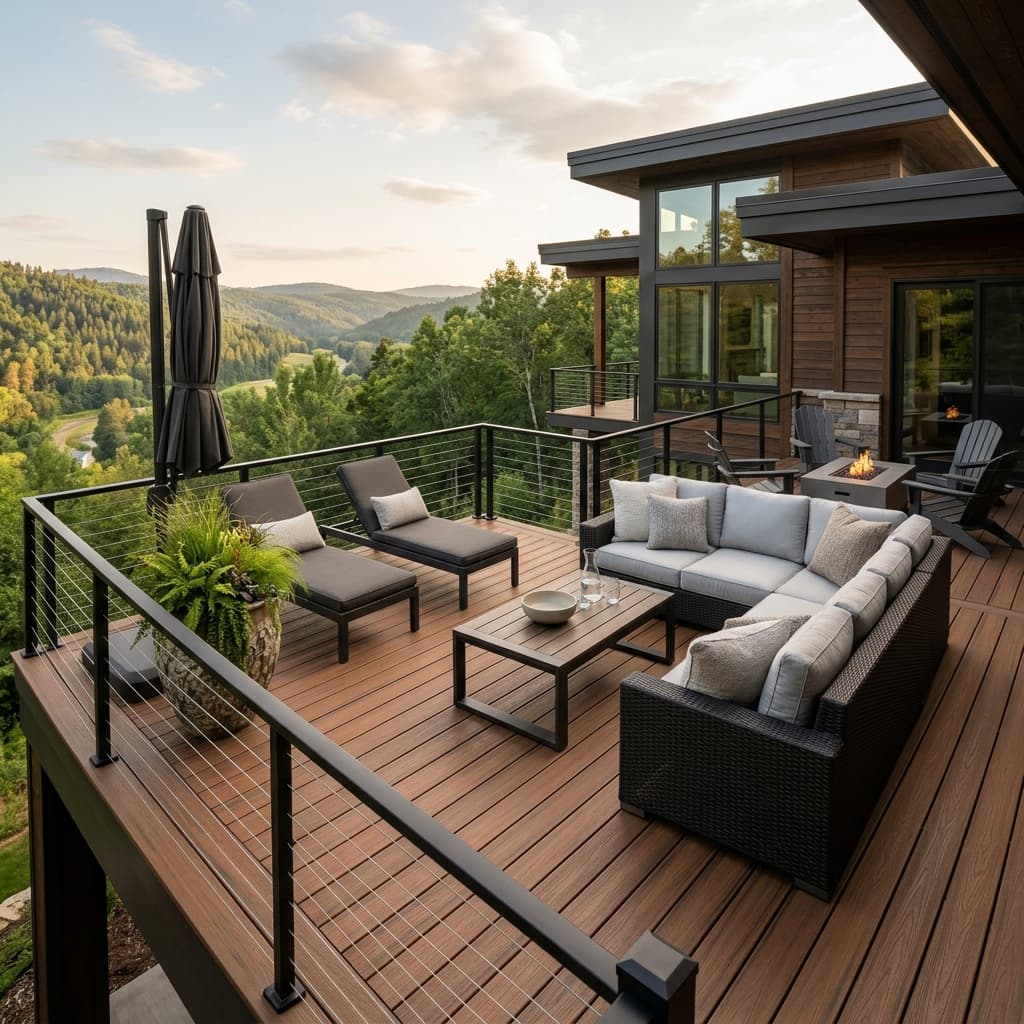
- Premium Composite Decking: High quality composite brands like Trex or TimberTech are engineered from recycled plastics and wood fibers, then capped in a protective polymer shell. The boards for that same deck will cost between $3,500 and $5,000. The total project cost, including labor, will easily land between $15,000 and $20,000.
If you stop the calculation here, wood wins easily. But a deck is completely exposed to the most brutal elements on earth: UV radiation, freezing ice, pouring rain, and wood boring insects.
2. The Maintenance Nightmare of Wood
Pressure treated wood is not a "set it and forget it" product. If you do not meticulously maintain it, it will warp, splinter, crack, and rot within seven years.
To keep a wood deck looking good and structurally safe, you must commit to a brutal maintenance schedule.
The Annual Wood Deck Chore List
- Power Washing: Every spring, you must power wash the entire surface to remove algae, mold, and ground in dirt. If you use too much pressure, you will destroy the wood fibers.
- Sanding: Once dry, you have to sand down the inevitable splinters and rough patches.
- Staining and Sealing: You must apply a high quality water repellent stain or sealer.
Want to see this design on your house?
Don't just read about it. Upload a photo of your home and use our free AI visualizer to test these styles instantly.
Start Designing For FreeThe 10-Year Cost: If you hire a professional to wash, sand, and seal your 320 square foot deck every two years (the minimum recommended schedule), you will easily spend $1,000 per application. Over 10 years, that is $5,000 in maintenance costs alone.
If you do it yourself, you are paying with your weekends. Most of my clients value their summer weekends far too much to spend them covered in toxic wood stain.
3. The Composite Advantage: Zero Maintenance
This is where the math flips in favor of composite decking.
Modern capped composite decking is virtually indestructible under normal use. It does not rot. It does not warp. It does not splinter. And most importantly, it never needs to be sanded, stained, or sealed. Ever.
The Composite Chore List
- Sweep it: Sweep the leaves off in the fall.
- Wash it: Hose it down with some mild soap and water in the spring if it gets dirty.
That is the entire list. The 10-year maintenance cost for a composite deck is exactly $0.
4. The ROI and Lifespan
When you combine the initial installation cost with the 10-year maintenance cost, the gap between wood and composite completely vanishes. By year seven or eight, the wood deck has officially become more expensive than the composite deck.
But the story gets worse for wood.
By year 12, a pressure treated wood deck is usually nearing the end of its usable life. The boards will be heavily cracked, the structural joists may have early stage rot, and the nails will be popping out. You will be looking at a total replacement.
High quality composite decking, on the other hand, comes with 25-year, 30-year, or even 50-year fade and stain warranties. A composite deck built today will look identical to the day it was installed in the year 2050.
My Final Take
If you are flipping a house or moving in two years, build a pressure treated wood deck. It is the cheapest way to pass a home inspection and sell the property.
However, if this is your forever home, or if you plan to stay for more than five years, choosing wood is a massive financial mistake. The upfront cost of composite decking is painful, but it buys you decades of maintenance free luxury and completely eliminates the ongoing, hidden costs of traditional lumber. In 2026, composite is the only logical choice for a serious homeowner.