
Herringbone Paver Patterns
Explore the latest trends for herringbone paver driveway patterns. Find the perfect look for your home's architecture and discover complementary materials.
See this on your own home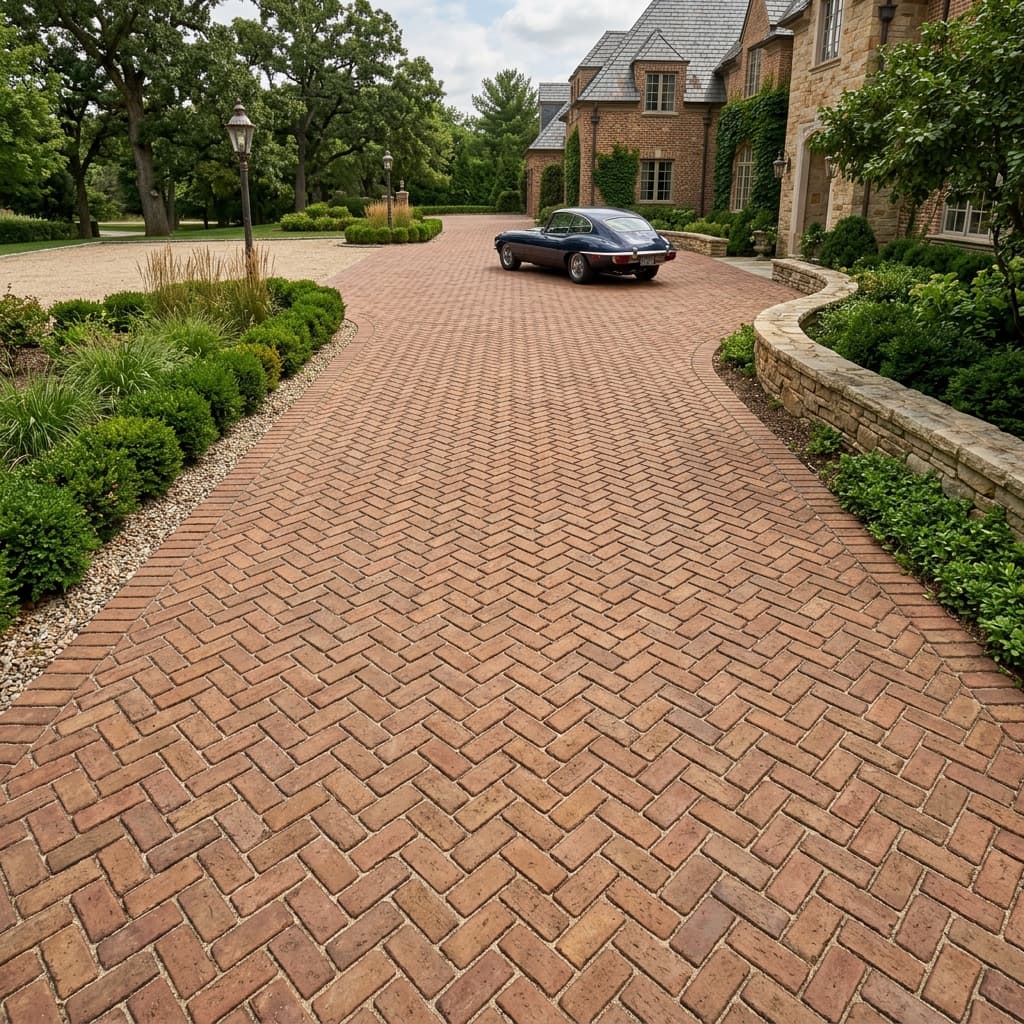
Design Considerations
What you need to know before choosing herringbone paver patterns.
Pros
- The strongest interlocking pattern for heavy vehicle loads
- Prevents pavers from shifting or separating
- Classic, elegant European aesthetic
Cons & Challenges
- Requires massive amounts of edge cutting
- Higher labor costs due to complex installation
- Can look too busy with highly variegated colored pavers
The Ultimate Strength: Herringbone Paver Patterns
When designing a paver driveway, homeowners spend weeks agonizing over the color and texture of the stone. However, the most critical decision you will make regarding the longevity and durability of your driveway is the pattern in which those stones are laid.
While running bond (like a traditional brick wall) or basket-weave patterns look beautiful on a patio, they are structurally inferior for a driveway. The undisputed champion of vehicular hardscaping is the classic Herringbone pattern.
The Physics of Interlocking Strength
A driveway must endure massive horizontal forces. When a 5,000-pound SUV pulls into your driveway and turns its wheels, it applies immense twisting torque to the surface. When you hit the brakes, the car tries to push the pavers forward.
If pavers are laid in long, straight, continuous lines (like a running bond pattern), those horizontal forces will eventually push the pavers apart, creating long, ugly gaps that fill with weeds and eventually lead to catastrophic rutting.
Herringbone solves this through sheer geometry. In a herringbone pattern, the pavers are laid at 45-degree or 90-degree angles to each other, creating a zig-zag effect. Because there are no continuous straight lines running across the driveway, the twisting and braking forces of vehicle tires are instantly dispersed across the entire interlocking web of pavers. It is virtually impossible for a car to push a herringbone driveway apart.
The European Aesthetic
Beyond its structural superiority, the herringbone pattern offers unparalleled, classic curb appeal.
It evokes the feeling of historic European streets and grand estate courtyards. The zig-zag pattern naturally draws the eye up the driveway toward the home, creating a strong sense of perspective and grandeur.
To maximize this aesthetic, use a traditional red clay brick paver or a tumbled, weathered concrete paver. For a more modern take on the classic pattern, use an oversized, sleek charcoal paver laid in a 90-degree herringbone; this provides the structural strength of the historic pattern but with a sharp, contemporary edge.
The Cost of Complexity
You must expect to pay a premium for a herringbone driveway compared to simpler patterns.
Because the pattern runs at an angle to the edges of the driveway, every single paver that touches the border must be custom-measured and cut with a diamond masonry saw to fit. This massive amount of edge-cutting drastically increases the labor hours required to finish the project. Furthermore, the complexity of keeping the pattern perfectly straight and true over a large area requires a highly skilled, experienced hardscaping crew. This is not a project for the cheapest bidder.
Material Textures & Finishes
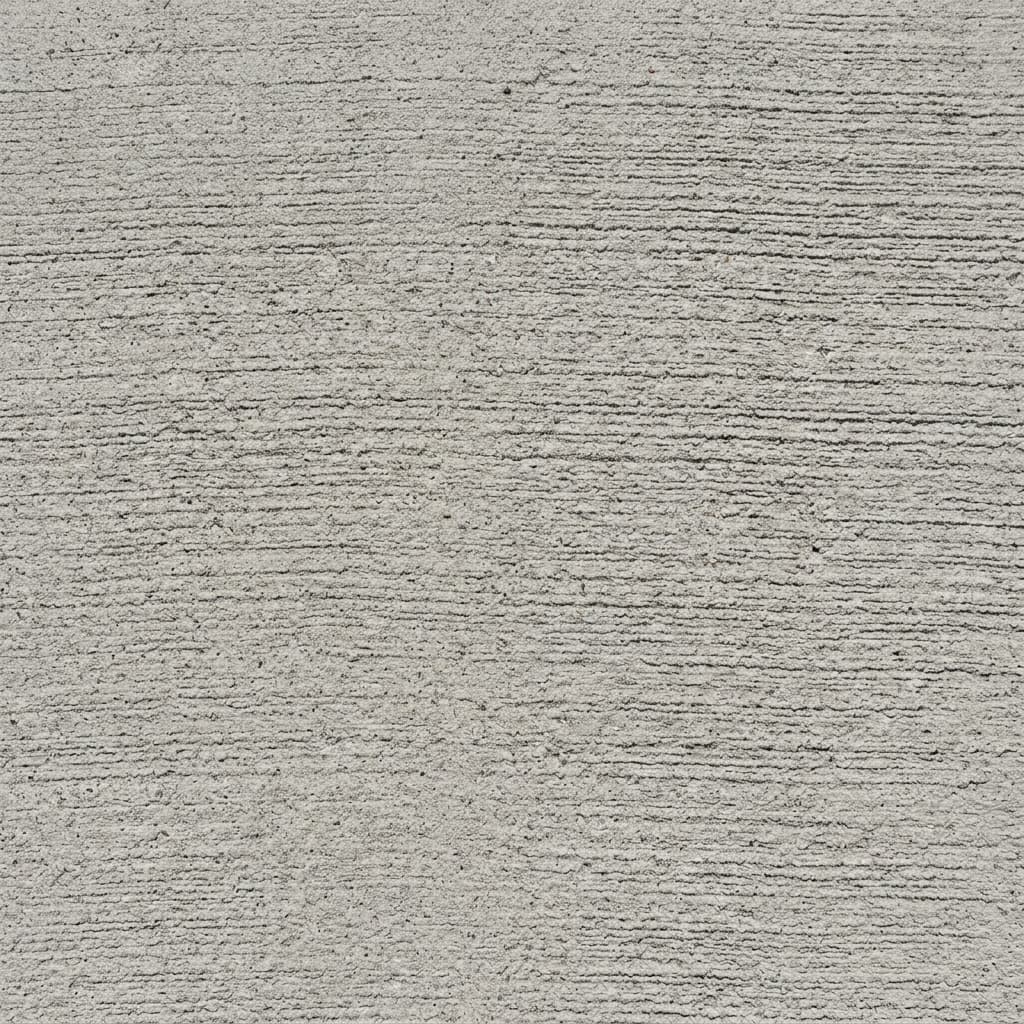
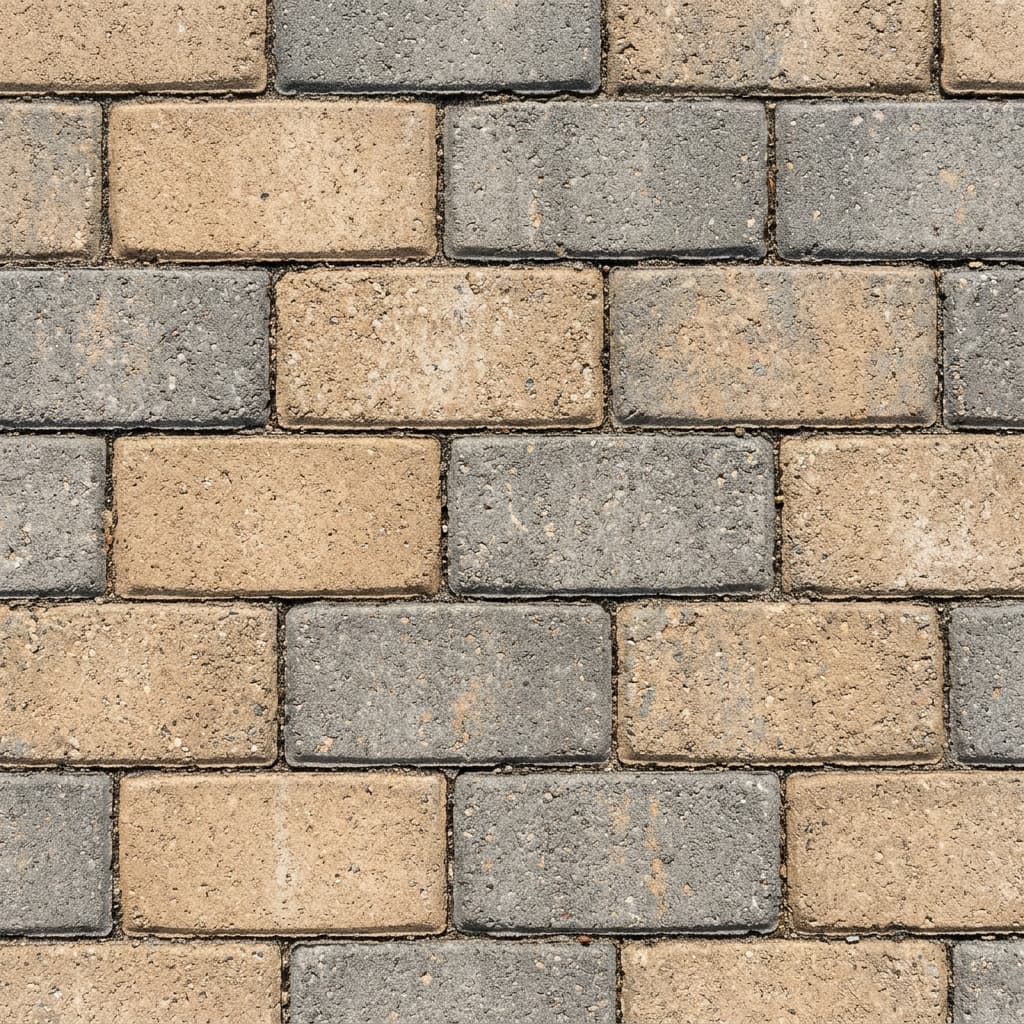
Up-close details of the driveway materials featured in these designs.
Frequently Asked Questions
Common questions about herringbone paver patterns and exterior visualization.
How can I see what my house looks like with herringbone paver patterns?
You don't have to guess based on small samples. You can use Exterior Vibe's free AI visualizer to upload a photo of your house and instantly see herringbone paver patterns applied to your exterior in seconds.
Is there an app to test driveway on my home exterior?
Yes, Exterior Vibe is a free web application that allows you to test different driveway options on your actual home. Simply upload a photo and the AI will apply the new materials, taking lighting and rooflines into account.