Mid-Century Modern Styles
Explore the latest trends for mid century modern front door styles. Find the perfect look for your home's architecture and discover complementary materials.
See this on your own home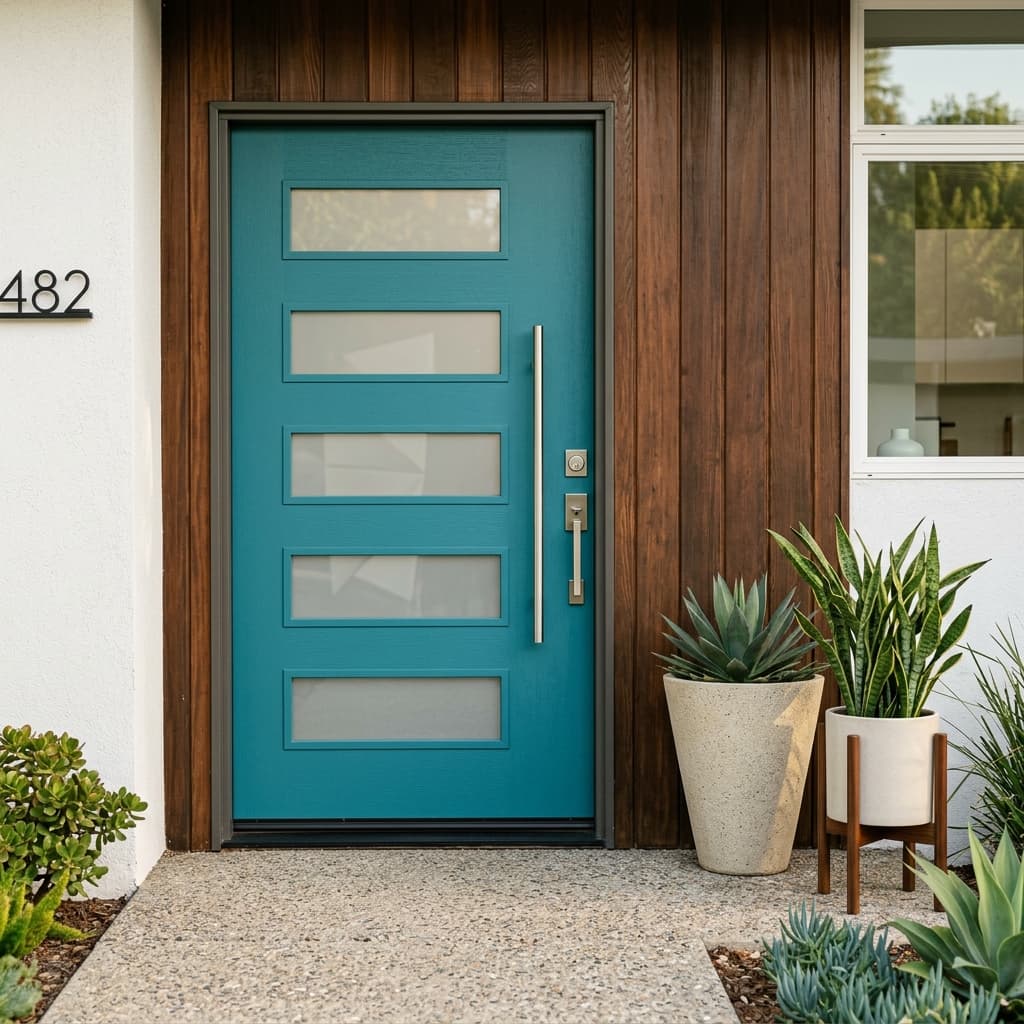
Design Considerations
What you need to know before choosing mid-century modern styles.
Pros
- Asymmetrical glass panels look incredibly stylish
- Bright retro colors (orange, teal) fit the aesthetic perfectly
- Allows privacy while letting in light
Cons & Challenges
- Only works on appropriate MCM or contemporary architecture
- Custom glass layouts can be pricey
- Retro colors require frequent repainting to stay vibrant
Reviving the Retro: Mid-Century Modern Front Doors
Mid-Century Modern (MCM) architecture is defined by its clean, horizontal lines, flat or low-pitched roofs, and massive expanses of glass designed to blur the line between indoor and outdoor living.
If you own an authentic MCM home—or a contemporary home heavily inspired by the era—installing a standard 6-panel colonial front door is a massive architectural mistake. To truly honor the architecture, you need a front door that embraces the bold, optimistic, and highly geometric design language of the 1950s and 60s.
The Signature Look: Asymmetrical Glass
The defining characteristic of an authentic mid-century modern front door is the aggressive use of geometric glass cutouts.
Unlike traditional doors that feature glass placed symmetrically at the top, MCM doors often feature glass arranged in unique, asymmetrical patterns.
- The 3-Lite Vertical: Three small, square windows stacked vertically down the handle side of the door.
- The Staggered Blocks: Rectangular glass cutouts arranged in a staggered, stair-step pattern across a solid slab door.
- The Starburst or Diamond: For ultimate retro flair, doors featuring a single, large diamond or starburst-shaped window in the center perfectly capture the "Space Age" optimism of the era.
These glass elements are almost always obscure (frosted, reeded, or atomic-patterned) to allow light in while maintaining privacy.
The Color Palette of the Atomic Age
MCM design is not shy about color. While the body of a mid-century house is often a muted natural tone (brown, taupe, or dark charcoal), the front door is the designated pop of vibrant, unapologetic color.
To achieve true historical accuracy, look toward the iconic colors of the era:
- Chartreuse: A bright, yellow-green that pops brilliantly against dark wood siding.
- Turquoise/Teal: The quintessential 1950s color, perfect for homes with gray or white exteriors.
- Tangerine Orange: A bold, high-energy choice that looks incredibly sophisticated against dark charcoal or black brick.
Modern Materials, Retro Style
Finding an authentic, vintage solid-wood MCM door in good condition is incredibly difficult and expensive. Thankfully, modern manufacturers (like Crestline or Therma-Tru) now offer dedicated Mid-Century lines.
These modern reproductions offer the exact asymmetrical glass patterns and retro hardware of the 1950s, but they are built using high-density insulated fiberglass. This means you get the perfect Palm Springs aesthetic with modern energy efficiency, zero drafts, and no warping or rotting.
Frequently Asked Questions
Common questions about mid-century modern styles and exterior visualization.
How can I see what my house looks like with mid-century modern styles?
You don't have to guess based on small samples. You can use Exterior Vibe's free AI visualizer to upload a photo of your house and instantly see mid-century modern styles applied to your exterior in seconds.
Is there an app to test front door on my home exterior?
Yes, Exterior Vibe is a free web application that allows you to test different front door options on your actual home. Simply upload a photo and the AI will apply the new materials, taking lighting and rooflines into account.